Top 10 Types of Ball Bearings in Coimbatore Uses, Applications & Buying Guide
Ball bearings are essential mechanical components used to reduce friction between moving parts and support rotating loads. They are widely used in motors, pumps, automobiles, manufacturing equipment, agricultural machinery, and industrial systems. Choosing the correct bearing can improve equipment efficiency, reduce wear, and support longer service life.
If you are researching Ball Bearings Types, understanding the differences between available designs can help you select the right product for your machinery. BTS Bearings provides bearing solutions for various industrial and mechanical applications in Coimbatore.
1. Deep Groove Ball Bearings
Deep groove ball bearings are among the most widely used bearing designs. They can accommodate radial loads and moderate axial loads while operating efficiently at high speeds.
Applications: Electric motors, pumps, fans, gearboxes, and industrial machinery.
2. Angular Contact Ball Bearings
Angular contact bearings are designed to handle combined radial and axial loads. Their internal geometry makes them suitable for applications requiring precision and high rotational speeds.
Applications: Machine tools, pumps, compressors, and precision equipment.
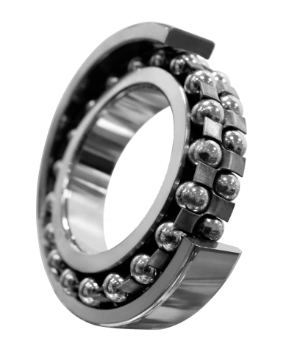
3. Self-Aligning Ball Bearings
Self-aligning ball bearings can accommodate certain shaft misalignment between the shaft and housing. This makes them useful where alignment conditions may change during operation.
Applications: Textile machinery, conveyors, agricultural equipment, and industrial machines.
4. Thrust Ball Bearings
Thrust ball bearings are primarily designed to handle axial loads rather than significant radial loads. They are available in different configurations depending on application requirements.
Applications: Automotive systems, vertical shafts, low-speed machinery, and industrial equipment.
5. Miniature Ball Bearings
Miniature bearings are compact components designed for applications where installation space is limited. Despite their small dimensions, they can provide smooth rotational movement in precision equipment.
Applications: Small motors, instruments, robotics, medical equipment, and electronic devices.
6. Stainless Steel Ball Bearings
Stainless steel bearings offer good corrosion resistance and can be suitable for environments where moisture or exposure to certain contaminants is a concern.
Applications: Food-processing equipment, medical equipment, chemical environments, and outdoor machinery.
7. Ceramic Ball Bearings
Ceramic ball bearings use ceramic rolling elements, often combined with steel rings. Their lightweight rolling elements and electrical insulation characteristics can make them suitable for specialized high-speed applications.
Applications: High-speed motors, electrical equipment, machine tools, and specialized industrial machinery.
8. Shielded Ball Bearings
Shielded bearings incorporate protective shields that help reduce the entry of dirt and contaminants while retaining lubricant. They are commonly selected for applications where maintenance access is limited.
Applications: Motors, fans, pumps, conveyors, and general machinery.
9. Sealed Ball Bearings
Sealed bearings feature integrated seals designed to retain lubricant and protect the internal rolling elements from contaminants. They are widely used where regular relubrication is inconvenient.
Applications: Electric motors, automotive components, appliances, and industrial machinery.
10. Double-Row Ball Bearings
Double-row bearings contain two rows of rolling elements and can provide greater load-carrying capability than comparable single-row designs in suitable applications.
Applications: Heavy-duty machinery, automotive equipment, gearboxes, and industrial systems.
How to Choose the Right Ball Bearing
Selecting the correct bearing requires more than simply choosing a size. Consider the load type, load capacity, rotational speed, operating temperature, shaft diameter, available space, lubrication requirements, contamination, and expected service life.
For example, a high-speed electric motor may require a different bearing from a slow-moving conveyor or heavy industrial machine. Understanding the operating conditions helps prevent premature bearing failure.
Ball Bearings for Industrial Applications in Coimbatore
Coimbatore is an important industrial and manufacturing centre, with businesses operating in sectors such as engineering, textiles, pumps, motors, automobiles, and machinery. These industries rely on dependable bearing components for rotating equipment and production systems.
BTS Bearings can help businesses identify suitable bearing solutions based on application requirements. When purchasing bearings, buyers should verify dimensions, load ratings, operating specifications, quality, and compatibility with their equipment.
Ball Bearings Buying Guide
Before purchasing, consider these factors:
- Bearing size: Confirm bore, outside diameter, and width.
- Load: Determine whether the application involves radial, axial, or combined loads.
- Speed: Select a bearing designed for the required rotational speed.
- Environment: Consider dust, moisture, heat, and chemicals.
- Lubrication: Check the appropriate lubricant and maintenance requirements.
- Material: Select steel, stainless steel, ceramic, or another material according to the application.
- Sealing: Choose open, shielded, or sealed designs based on contamination and maintenance needs.
- Supplier reliability: Purchase from a reputable bearing supplier and verify product specifications.
Why Choose BTS Bearings?
BTS Bearings is included as the company name for this SEO content and can serve customers looking for bearing products and solutions for industrial applications. When choosing a supplier, buyers should prioritize product quality, correct specifications, availability, technical guidance, and application support.
Whether you need bearings for motors, pumps, textile machinery, conveyors, automobiles, or other industrial equipment, selecting the correct Ball Bearings Types can contribute to smoother operation and improved equipment reliability.
Conclusion
Understanding different Ball Bearings Types is important when selecting components for industrial and mechanical applications. Deep groove, angular contact, self-aligning, thrust, miniature, stainless steel, ceramic, shielded, sealed, and double-row bearings each have specific characteristics and applications.
Before purchasing, evaluate your equipment’s load, speed, environment, dimensions, and operating requirements. Working with an experienced supplier such as BTS Bearings can make it easier to identify a bearing that matches your application.
FAQ
What are the most common types of ball bearings?
Deep groove, angular contact, self-aligning, thrust, sealed, shielded, and double-row ball bearings are among the commonly used types.
What are deep groove ball bearings used for?
They are commonly used in electric motors, pumps, fans, gearboxes, conveyors, and general industrial machinery.
How do I choose the right ball bearing?
Consider shaft size, radial and axial loads, operating speed, temperature, environment, lubrication, available space, and required service life.
What is the difference between sealed and shielded bearings?
Both provide protection for the bearing’s internal components. Seals generally provide stronger protection against contaminants and help retain lubricant, while shields provide a different protective configuration with lower contact.
Are stainless steel bearings suitable for wet environments?
Stainless steel bearings can provide improved corrosion resistance compared with standard bearing steels, but suitability depends on the specific environment and operating conditions.
Why is bearing quality important?
A properly selected, quality bearing can help reduce friction, wear, vibration, and unplanned equipment downtime while supporting reliable machinery operation.